Pinterest Unleashes Next-Generation AI Advertising Suite and Visual Search Tools to Capture High-Intent Gen Z Shoppers

Pinterest is aggressively positioning itself at the forefront of the artificial intelligence revolution in digital marketing, unveiling a robust suite of advanced advertising tools and consumer-facing experiences during its annual "Pinterest Presents" event on Tuesday. The sweeping updates, scheduled to roll out globally in the coming weeks, underscore the platform’s evolution from a traditional digital mood board into a high-converting, full-funnel performance marketing machine. As brands increasingly demand measurable lower-funnel outcomes, Pinterest’s leadership is betting that its unique combination of high-intent user traffic, cutting-edge AI integrations, and brand-safe guardrails will capture a growing share of global advertising budgets.
The timing of these announcements coincides with a period of remarkable financial and operational momentum for the visual discovery platform. Reporting a surge in both engagement and monetization, Pinterest’s second-quarter sales rose 18% to cross past previous benchmarks, fueled by an 11% year-over-year increase in global monthly active users, which now stand at an impressive 640 million. Furthermore, average revenue per user has outpaced Wall Street projections, and the company projects upcoming quarterly revenue to land between $1.19 billion and $1.21 billion. Industry analysts note that this resurgence is driving renewed marketer confidence, with agency-wide spending on the platform up significantly over the past year and paid clicks growing fivefold over the last three years.
Bridging Inspiration and Conversion Through Advanced AI
At the heart of Pinterest’s latest product rollout is a sophisticated integration of artificial intelligence designed to streamline campaign execution while preserving the native user experience. Chief Executive Officer Bill Ready emphasized to advertisers that Pinterest occupies a uniquely advantageous position in the consumer journey: users arrive with clear intent but frequently before they have finalized their purchasing decisions.
"That is the magic moment for a marketer to meet a potential customer," Ready told the audience of advertisers. "For much of our history, Pinterest was a great place to build awareness, but not to drive results. I’m proud to say that Pinterest is now a performance platform, and AI is powering all of it."
Among the marquee ad products launching in beta is Visual Search Ads, a tool designed to integrate sponsored products seamlessly into search results and Pin close-ups. For example, a user searching for statement handbags will soon encounter relevant, shoppable sponsored results that allow them to transition directly to a merchant’s checkout page. Crucially, Pinterest executives highlighted that this feature requires no net-new creative assets from brands, leveraging existing campaign materials to drive lower-funnel conversions.
Simultaneously, the platform’s automated advertising suite, Pinterest Performance+, is expanding to incorporate manual A/B testing capabilities and advanced optimization settings. Initially debuted in beta in 2024, the updated suite now enables brands to direct algorithms toward specific strategic outcomes—such as prioritizing new customer acquisition or highlighting seasonal inventory for key retail moments like the winter holidays. Advertisers can also integrate their proprietary mobile applications directly with the platform to promote seamless app installs.
Capturing the Next Generation of Consumers
Pinterest’s aggressive push into performance advertising is heavily underpinned by the demographic makeup of its expanding user base. More than half of the platform’s 640 million monthly active users belong to Gen Z, a highly coveted cohort that increasingly uses visual search engines as a primary discovery tool for new brands and products.
According to platform data, users conduct more than 80 billion searches every month, with over half of those queries directly tied to commercial intent—finding, trying, or buying specific products. Significantly for advertisers seeking open market share, approximately 96% of these searches are unbranded, leaving a vast expanse of white space for brands to establish early recognition and preference.
Lee Brown, Pinterest’s chief business officer, underscored this consumer psychology during his presentation. "Pinterest is where people come to decide what to try, buy, or do next," Brown stated. "People come here before their decision is made. They don’t even know how to describe what they want, but they know it when they see it. We can anticipate that next idea and help your brands become the answer people are looking for."
Brown also highlighted the psychological advantage of advertising on a platform driven by positive intent. Because users turn to Pinterest to gather ideas for home renovations, fashion updates, or upcoming social events, commercial content does not act as an unwelcome interruption. "When your ad shows up, it isn’t standing between them and what they came for," Brown noted. "It is what they came for."
Interactive Experiences and Connected TV Expansion
Beyond core search and automated ad placements, Pinterest is diversifying how users interact with brands through immersive technology and cross-media storytelling. One notable consumer-facing addition is Restyle, a camera-powered feature utilizing Pinterest Intelligence that allows users to photograph a physical space—such as a living room—and instantly visualize different aesthetic makeovers, such as a bohemian or industrial redesign. Users can then immediately purchase the specific physical goods, including lighting and tiles, featured in the simulated aesthetic. Restyle is slated for an upcoming beta release in the United States and Canada.
To further amplify these digital experiences, Pinterest is heavily investing in creator partnerships and connected television (CTV). In June, the platform introduced functionality enabling creators to link their Amazon storefronts directly to Pinterest while maintaining their affiliate links. David Brinker, Pinterest’s global head of content, noted that over 80% of users feel content on the platform is informed by expert opinions, and brand collaborations with creators consistently yield higher returns on ad spend and stronger brand awareness.
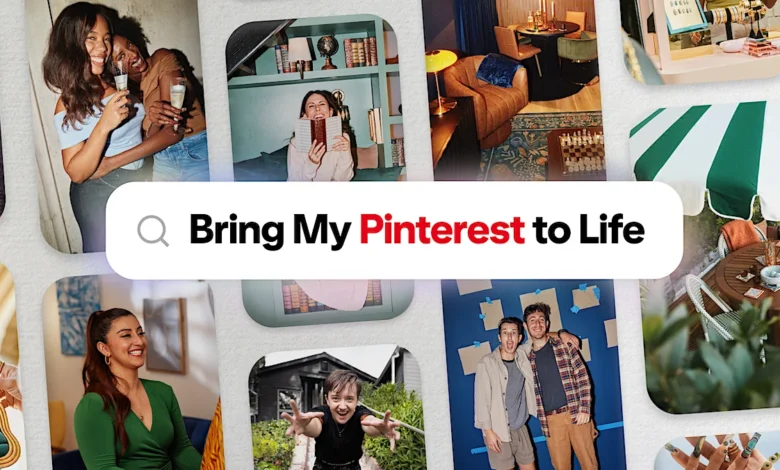
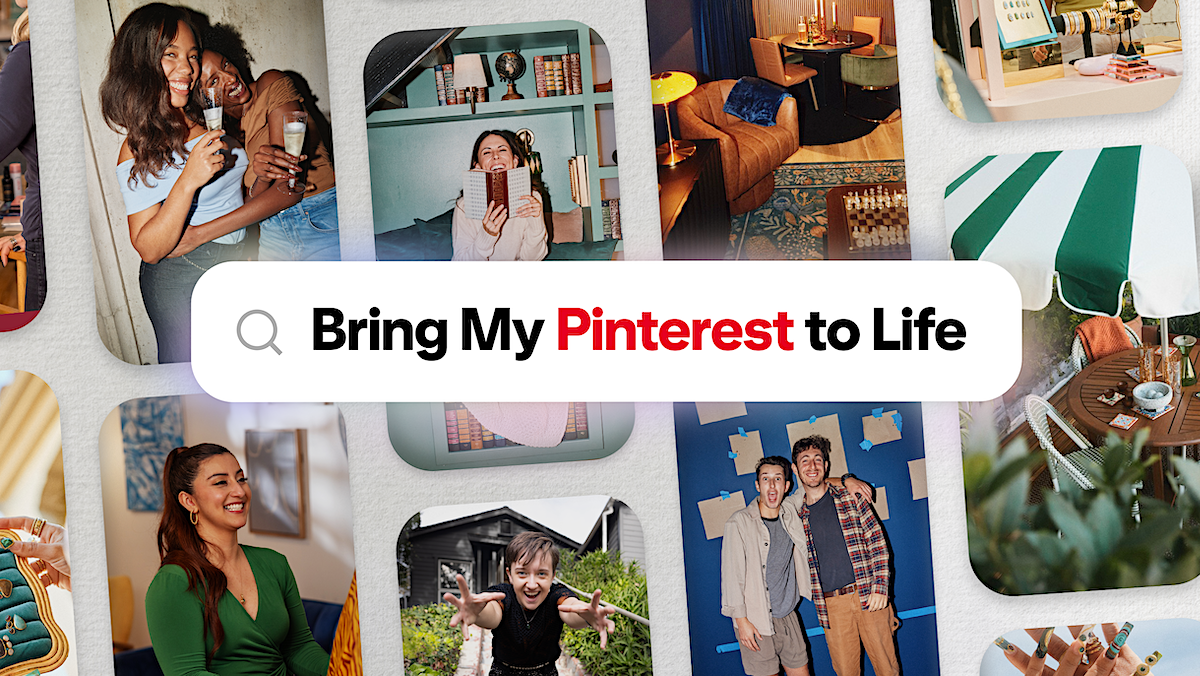
This multimedia approach was further solidified following Pinterest’s acquisition of CTV advertising platform tvScientific in February. Advertisers can now execute standalone connected TV campaigns through the platform. This capability was demonstrated vividly with the launch of "Bring My Pinterest to Life," a reality-style CTV series on Roku that pairs users with creator-hosts to execute room makeovers and wardrobe revamps. Episodes feature QR codes that direct viewers to dedicated Pinterest boards filled with shoppable products from major retail partners like Wayfair and Michaels. The show is currently filming its second season, slated for release in 2027.
Navigating the Balance Between AI Innovation and Brand Safety

Even as Pinterest integrates artificial intelligence deeper into its architecture to power visual recognition and ad targeting, executives used the event to address industry-wide concerns regarding generative AI content, commonly referred to as "AI slop." Amid rising user complaints concerning the proliferation of synthetic images and recipes across digital spaces, Pinterest has taken proactive steps to protect platform integrity.
Last year, the company introduced user controls enabling individuals to reduce the visibility of AI-generated images within sensitive categories such as architecture, beauty, and food and drink. Furthermore, Pinterest automatically disables data sharing for generative AI training for any user under the age of 18.
Chief Executive Officer Bill Ready framed these guardrails as a vital differentiator for brand partners weary of the wild west of digital advertising. Addressing advertisers directly, Ready contrasted Pinterest’s controlled environment with other major tech ecosystems. "You didn’t build this, and nobody in this room wants to advertise in a place that harms kids," he said. "You just haven’t had an alternative. If you wanted reach, you invested in the biggest platforms, whether or not you liked how they operated."
Complementing these technical safeguards, Pinterest’s marketing strategy increasingly champions real-world engagement and analog lifestyles. Highlighting an ongoing brand campaign that critiques "the cost of being constantly online," Chief Marketing Officer Claudine Cheever reported that user searches for offline, analog activities and basic communication devices have more than doubled on the platform.
Technical Infrastructure and Future Outlook
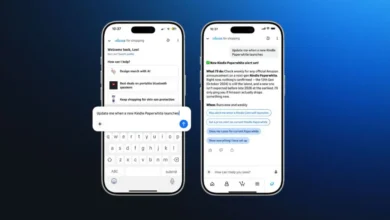
To support these intensive computational workloads, Pinterest continues to forge high-profile technology partnerships. Earlier in the week, Nvidia announced an expanded partnership with Pinterest to enhance the platform’s conversational AI tool, Pinterest Assistant, empowering it to process 25 times more visual context per request. Additionally, executive leadership has expressed strong support for open-weight artificial intelligence models—systems whose core components are made publicly accessible—signaling a collaborative approach to technological advancement.
Industry observers note that Pinterest’s strategic convergence of high-intent search traffic, generative AI tools, creator commerce, and strict safety guardrails places the company in a strong competitive position. As brands increasingly look beyond traditional social feeds for performance-driven environments where consumers are actively primed to spend, Pinterest’s evolution from a simple inspiration board into a comprehensive digital marketplace appears poised to deliver sustained growth through the remainder of the decade.